
04.03.26
How Counterfeit Currency Fuels Money Laundering?
Counterfeit currency is more than just a threat to the integrity of a nation’s financial system—it is a powerful enabler of money laundering and a catalyst for a wide range of criminal activities. Understanding how counterfeit money fuels money laundering is essential for policymakers, law enforcement, and financial institutions striving to protect the global economy from illicit financial flows.
The Nexus Between Counterfeit Currency and Money Laundering
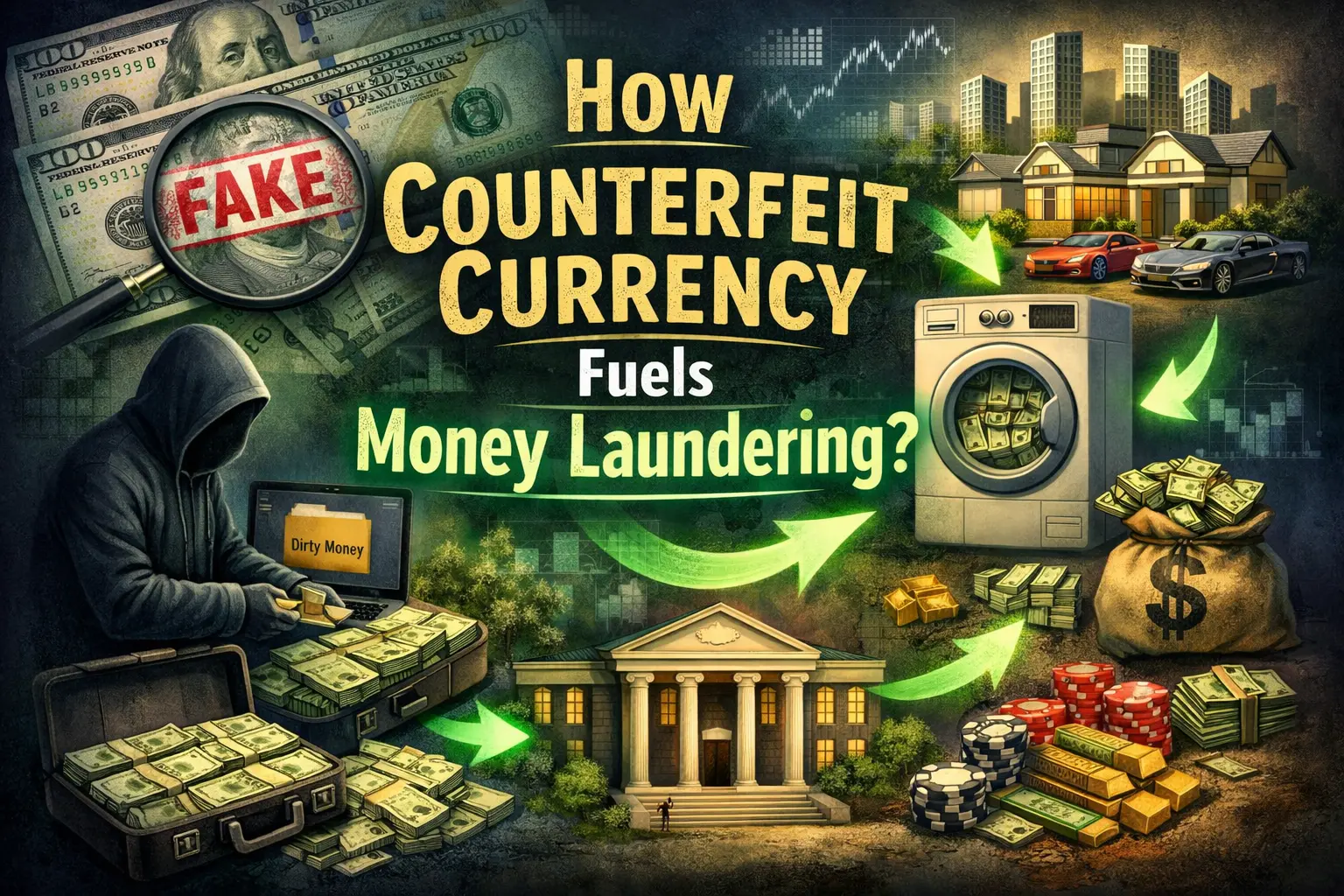
Money laundering is the process of disguising the origins of illegally obtained money, making it appear legitimate. Counterfeit currency, by its very nature, is illegal and untraceable, making it an attractive tool for criminals seeking to integrate illicit funds into the financial system. The relationship between counterfeit currency and money laundering is symbiotic: counterfeiters need to circulate their fake notes without detection, while money launderers seek to obscure the origins of dirty money. Together, they exploit vulnerabilities in financial systems, fueling a cycle of crime and corruption.
Methods of Using Counterfeit Currency in Money Laundering
- Placement Stage: The first stage of money laundering involves introducing illicit funds into the financial system. Counterfeit currency is often used at this stage because it can be easily mixed with legitimate cash. Criminals may use counterfeit notes to purchase goods, pay for services, or deposit small amounts into bank accounts, hoping to avoid detection.
- Layering Stage: Once counterfeit money enters circulation, launderers use complex transactions to obscure its origin. This may involve exchanging counterfeit notes for genuine currency, purchasing high-value items (such as luxury goods or vehicles), or using casinos and other cash-intensive businesses to swap fake bills for chips or vouchers. Each transaction adds a layer of complexity, making it harder for authorities to trace the illicit funds.
- Integration Stage: In the final stage, laundered money is reintroduced into the legitimate economy, often through investments, real estate, or business ventures. By this point, the counterfeit currency has been exchanged for real money or assets, making it nearly impossible to distinguish from legitimate funds.
The Impact on Financial Institutions and the Economy
The circulation of counterfeit currency undermines trust in the financial system and imposes significant costs on businesses and banks. When counterfeit notes are discovered, they are removed from circulation, resulting in direct financial losses for whoever holds them. Banks and retailers must invest in advanced detection technologies and employee training, increasing operational costs.
Moreover, the presence of counterfeit money complicates anti-money laundering (AML) efforts. Financial institutions rely on transaction monitoring and reporting to detect suspicious activity, but counterfeit currency can slip through the cracks, especially in cash-heavy sectors. This not only facilitates money laundering but also erodes public confidence in the financial system.
Counterfeit Currency and Organized Crime
Counterfeit currency production is often linked to organized crime syndicates, which use the proceeds to fund other illegal activities such as drug trafficking, terrorism, and human trafficking. The profits from passing counterfeit notes are laundered alongside money from other criminal enterprises, creating a complex web of illicit financial flows that are difficult to unravel.
Combating the Threat
Addressing the dual threat of counterfeit currency and money laundering requires a multi-faceted approach:
- Enhanced Detection: Banks and businesses must invest in state-of-the-art counterfeit detection equipment and regularly update their security protocols.
- Regulatory Oversight: Governments should enforce strict AML regulations, requiring financial institutions to report suspicious transactions and conduct thorough customer due diligence.
- International Cooperation: Counterfeit currency and money laundering are global problems that demand cross-border collaboration. Sharing intelligence and best practices among law enforcement agencies is crucial.
- Public Awareness: Educating the public about the risks and signs of counterfeit currency can help reduce its circulation and support law enforcement efforts.
Conclusion
Counterfeit currency is not just a financial nuisance—it is a potent tool for money laundering and organized crime. By understanding the mechanisms through which counterfeit money fuels illicit financial flows, stakeholders can develop more effective strategies to safeguard the integrity of the global financial system. Vigilance, innovation, and cooperation are essential in the ongoing fight against counterfeit currency and money laundering.